



Introduction
The Saudi Arabian facility management landscape is undergoing a massive shift. As the Kingdom builds future-ready cities like NEOM and the Red Sea Project, the demand for sophisticated CAFM software in Saudi Arabia (KSA) has transitioned from a luxury to a logistical necessity. For facility heads and property managers, the right software is no longer just about tracking work orders; it’s about aligning with Saudi Vision 2030 through digital excellence and sustainability.
Understanding the FM Tech Stack: CAFM vs. CMMS vs. CWMS
In the B2B world, technical jargon can often lead to expensive procurement mistakes. For IT and Admin heads in KSA, understanding these distinctions is critical for choosing the right architecture.
The Core Differences at a Glance
While often used interchangeably, these systems serve different operational depths:
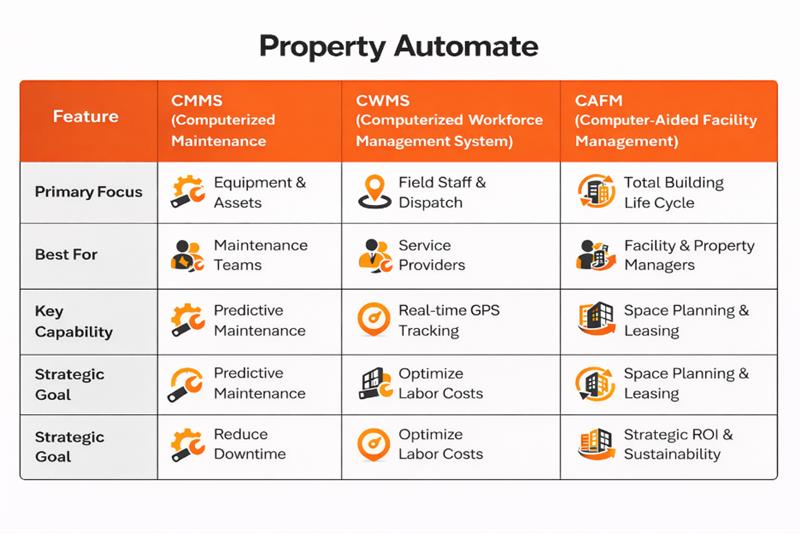
While the table provides a quick comparison, understanding how these systems function in a real-world B2B environment requires looking at their operational depth.
When evaluating these technologies, CMMS acts as the technical foundation, focusing specifically on the health of equipment and assets through tools like predictive maintenance to reduce downtime. In contrast, CWMS is designed for the human element, prioritizing field staff and dispatching logistics with real-time GPS tracking to optimize labor costs for service providers.
For those overseeing an entire portfolio, CAFM offers the most comprehensive scope, managing the total building life cycle—including space planning and leasing—to drive long-term ROI and sustainability. Ultimately, while maintenance teams rely on CMMS and service providers on CWMS, it is the facility and property managers who utilize CAFM as a strategic tool for high-level oversight.
Why KSA-Specific Features Matter for Your Facility
Selecting facility management software for the Saudi market requir es more than just a global brand name. Local compliance and cultural adaptation are the two biggest factors in successful adoption.
1. ZATCA Compliance and E-Invoicing
In 2026, integration with the Zakat, Tax and Customs Authority (ZATCA) is non-negotiable. Your CAFM system must support Phase 2 of the Fatoora project, ensuring that every maintenance invoice or service contract is electronically signed, hashed, and compliant with KSA tax laws.
2. Bilingual Arabic-English Support
While management often operates in English, the technicians and ground staff frequently require an Arabic interface. A truly localized CAFM software in Saudi Arabia (KSA) offers a seamless switch between languages to reduce human error and improve data entry accuracy.
3. Climate-Resilient Predictive Maintenance
KSA’s extreme temperatures put immense pressure on HVAC and cooling systems. Advanced CAFM tools now use AI to predict when a chiller might fail before it happens, preventing costly shutdowns during the peak summer months in Riyadh or Jeddah.
Top Benefits for Decision Makers
- For Facility Heads: Gain a "single pane of glass" view into all site operations across the Kingdom.
- For IT Heads: Ensure data residency (KSA-based cloud servers) and secure API integrations with existing ERPs like SAP or Oracle.
- For Property Managers: Improve tenant satisfaction with mobile apps for instant service requests and automated lease renewals.
The Future of FM: AI and IoT in the Kingdom
The next frontier for CAFM software in Saudi Arabia (KSA) is the integration of the Internet of Things (IoT). Smart buildings in the King Abdullah Financial District (KAFD) are already using sensors to monitor occupancy and energy usage, feeding that data directly into CAFM dashboards to automate lighting and cooling—reducing energy costs by up to 25%.
Conclusion
Choosing the right CAFM software in Saudi Arabia (KSA) is a strategic investment that pays dividends in operational efficiency, asset longevity, and regulatory peace of mind. As the Kingdom continues its rapid urbanization, those who embrace these digital tools will lead the market.
FAQ's
Is CAFM software mandatory for Saudi businesses?
While not mandated by a single law, using CAFM or CMMS is often required by the National Framework for Facility Management and is essential for meeting ZATCA e-invoicing and Mostadam sustainability standards.
Does CAFM software support Arabic?
Most premium providers in the Middle East now offer full bilingual support (Arabic/English) for both web dashboards and mobile technician apps to cater to a diverse workforce.
Can CAFM integrate with Saudi e-invoicing?
Yes. Leading CAFM solutions in KSA offer direct API integration with ZATCA's Fatoora portal, ensuring that B2B service invoices meet all legal requirements automatically.